A Simple Guide Based on Hair Loss Stage
Anyone considering a hair restoration procedure eventually asks the same question:
How many grafts will I need?
It sounds like something that should have a quick numerical answer. In reality, graft planning is more complex. The number of grafts is not simply chosen or guessed. It is estimated that after understanding your pattern of hair loss, donor hair availability, and what level of coverage may be realistically achieved.
During consultations at Hair Transplantation, many people expect a fixed number immediately. However, graft estimates are normally clearer only after a proper scalp assessment and closer evaluation of the hair loss pattern.
This guide explains how graft numbers are generally estimated and why they may differ from one person to another.
What Exactly Is a Hair Graft?
A hair graft is a small natural group of hair follicles taken from the back or sides of the scalp, known as the donor area. Hair grows in natural groups, not as single strands, and each graft may contain one to four hairs.
This means 2000 grafts does not equal 2000 hairs. The actual number of transplanted hairs is usually higher because each graft contains multiple hairs. That is why hair transplants are measured in grafts rather than individual hairs.
Why Graft Numbers Are Always Estimates
One of the biggest misunderstandings about hair transplantation is expecting an exact number too early.
Graft requirements are estimated through clinical evaluation, not preference. Several factors influence the final plan:
- Extent of hair loss
- Size of the thinning or bald area
- Donor hair density and strength
- Hair thickness and texture
- Current age and future hair loss progression
Because these variables differ from person to person, two individuals with similar hairlines may still require very different graft numbers.
Estimated Hair Transplant Graft Numbers by Hair Loss Stage
Hair transplant planning is often discussed using general hair loss stages. These ranges help provide guidance but should not be seen as guarantees.
Mild temple recession or early hairline changes.
Estimated range: 800 to 2000 grafts
Planning often focuses on hairline refinement rather than large-area coverage.
More noticeable thinning across the frontal scalp or mid-scalp.
Estimated range: 1500 to 3000 grafts
The aim may be to improve visual density while preserving donor hair for possible future treatment.
Hair loss involving the frontal scalp, mid-scalp, and crown.
Estimated range: 3000 to 5000+ grafts
Planning usually focuses on balanced and natural-appearing coverage rather than recreating very dense youthful hair
Why Graft Numbers Alone Do Not Predict Hair Transplant Results
Hair transplant procedures create the appearance of density, not a one-for-one replacement of lost hair.
Several natural factors influence how much coverage grafts can produce:
- Hair thickness – coarse hair often provides more visual fullness
- Hair shape – wavy or curly hair spreads differently than straight hair
- Natural follicle density – higher density may require fewer grafts
- Scalp contrast – lower contrast between hair and scalp can make hair appear fuller
For this reason, graft planning focuses on visual balance rather than numbers alone.
Are Online Hair Transplant Graft Calculators Reliable?
Online graft calculators can offer a general idea, but they cannot replace clinical assessment.
Most tools do not evaluate:
- donor hair density
- hair thickness or calibre
- scalp flexibility
- ongoing progression of hair loss
- long-term donor management
These factors are essential when planning a safe and natural-looking outcome.
A professional consultation evaluates all variables before suggesting a realistic graft range.
Does More Grafts Mean Better Hair Transplant Results?
Not necessarily.
This is a common misunderstanding. More grafts do not always mean a better result.
The donor area is limited and needs to be used carefully over the long term. If too many grafts are taken in one procedure, it may limit options later, especially if hair loss continues.
Because of this, clinicians may plan more carefully and focus on long-term balance rather than using the highest possible number of grafts in one go. The idea is to balance what you need now with what may be needed in the future
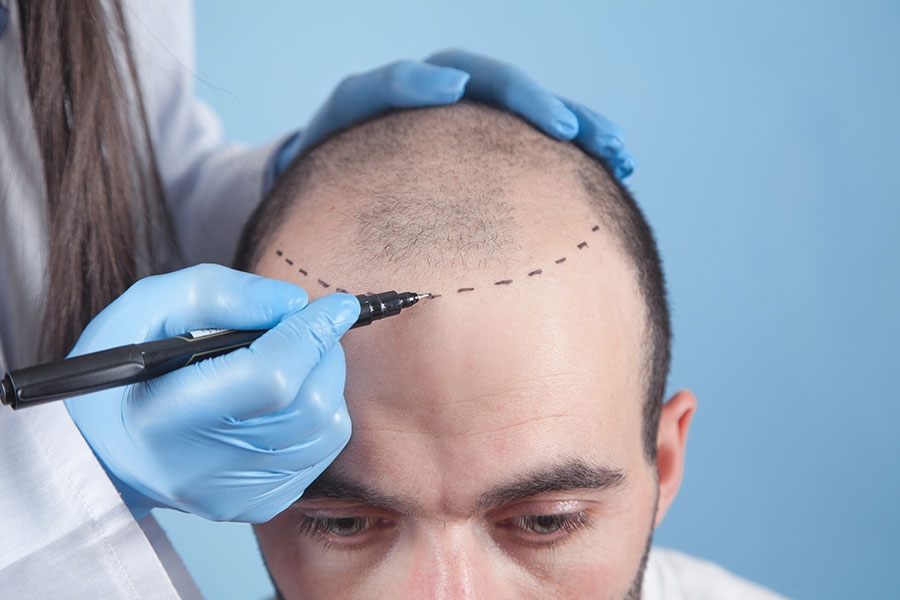
What Happens During a Professional Hair Graft Assessment
A hair transplant consultation is usually more detailed than many people expect.
Assessment may include:
- Mapping the current pattern of hair loss
- Analysing donor area density and quality
- Assessing hair calibre and texture
- Estimating potential future hair loss progression
- Calculating an appropriate graft range for coverage
Digital imaging or scalp analysis technology may also be used to assist planning.
The goal is not simply to provide one number, but to develop a medically balanced treatment strategy.
Key Takeaway
Understanding graft numbers is less about exact figures and more about realistic planning.
They depend on hair loss, donor hair availability, and achievable coverage.
A consultation at Hair Transplantation in Melbourne may help provide a more accurate graft estimate based on individual assessment.