Hair Transplant Treatment Melbourne
Consultation for Hair Transplant Treatment
Hair loss can affect both men and women and may develop gradually over time due to genetics, hormonal changes, medical conditions, ageing, or other factors. It’s one option that may be considered for suitable candidates experiencing hair thinning, a receding hairline, crown balding, or patchy hair loss.
At Hair Transplantation Clinic, Dr Eeshara Vithana (MBBS, MD, MSc, FRACGP, FAID, FACAM) can help with personalised assessments and treatment recommendations based on your individual hair loss pattern, donor hair availability, medical history, and treatment goals.
Every patient is different, and suitability can only be determined following a comprehensive clinical consultation.
Understanding Hair Loss
Hair loss can occur for a variety of reasons, with male pattern baldness and female pattern hair loss being among the most common causes. You may notice:- Gradual thinning at the crown
- A receding hairline
- Widening of the hair part
- Reduced hair density
- Patchy areas of hair loss
- Increased hair shedding
What Is a Hair Transplant?
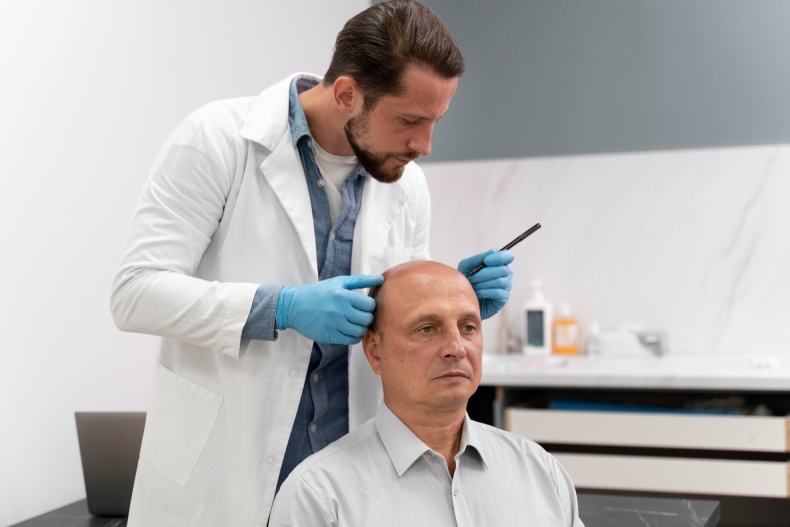
A hair transplant is a medical procedure that involves transferring healthy hair follicles from a donor area, typically located at the back or sides of the scalp, to areas experiencing hair loss or thinning.
Rather than creating new hair follicles, the procedure redistributes existing hair follicles to improve hair coverage in selected areas.
Hair transplant procedures may be considered for:
- Receding hairlines
- Crown thinning
- Male pattern baldness
- Female pattern hair loss in selected cases
- Beard restoration
- Eyebrow restoration
- Hair loss resulting from certain scars or injuries.
The most appropriate treatment approach depends on the extent of hair loss, donor hair availability, and individual treatment objectives.
Mandatory Surgical Notice
Any surgical or invasive procedure carries risks. Before proceeding, you should seek a second opinion from an appropriately qualified health practitioner.
Follicular Unit Extraction (FUE)
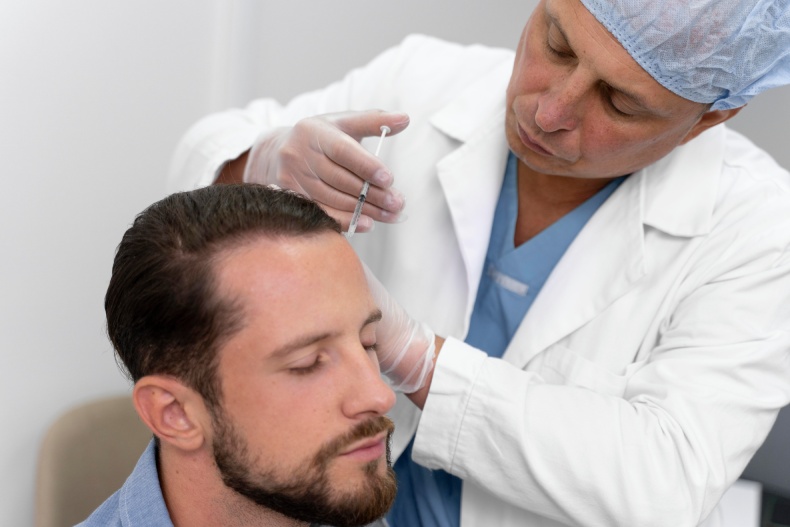
Follicular Unit Extraction (FUE) is a commonly performed hair transplant technique that involves removing individual follicular units from the donor area before transplanting them into the treatment area. Potential considerations of FUE may include:- Leaves small, scattered dot scars instead of a single linear scar
- Ability to wear shorter hairstyles
- Suitable for many patterns of hair loss
- Gradual recovery following treatment
Follicular Unit Transplantation (FUT)
Follicular Unit Transplantation (FUT) involves removing a small strip of donor tissue from the scalp, from which individual follicular units are prepared and transplanted.
FUT may be considered in situations where:
- A larger number of grafts may be required
- Donor hair characteristics are suitable
- Treatment goals align with this technique
The advantages, limitations, and differing scarring patterns of FUT and FUE can be discussed during your consultation to determine the most appropriate treatment approach.
How Much Does Hair Transplant Cost in Melbourne?
The cost of hair transplant treatment varies depending on several factors, including:
- The extent of hair loss
- The number of grafts required
- The treatment technique used
- Individual treatment goals
- Complexity of the procedure
Following an assessment, a personalised treatment plan can be provided outlining the recommended procedure and associated costs.
Please note that all pricing information is indicative only, and a formal written quote will only be provided after a complete clinical evaluation.
Am I Suitable for a Hair Transplant?
Hair transplant treatment may be considered for individuals who:
- Have sufficient donor hair available
- Experience stable patterns of hair loss
- Are in good general health
- Have realistic expectations regarding outcomes
Not everyone experiencing hair loss will be suitable for hair transplant surgery. Alternative treatment options may be recommended depending on the cause and progression of hair loss. A comprehensive consultation helps determine the most appropriate approach for your circumstances.
What to Expect During Your Hair Transplant Consultation?
At Hair Transplantation Clinic, consultations are designed to provide a thorough assessment of your hair loss concerns and treatment options.
During your consultation, we may:
- Assess your scalp and hair loss pattern
- Review your medical history
- Discuss previous treatments
- Evaluate donor hair availability
- Explain potential treatment options
- Discuss expected recovery and outcomes
- Answer your questions
This process allows you to make an informed decision regarding your treatment options.
Recovery After Hair Transplant Treatment
Recovery varies between individuals and depends on the treatment performed. During the early stages of healing, some patients may experience:
- Mild redness
- Swelling
- Tenderness
- Temporary shedding of transplanted hairs
Hair growth following transplantation occurs gradually. General recovery milestones may include:
- First Few Days: Initial healing begins and post-procedure care instructions should be followed carefully.
- First Month: Temporary shedding of transplanted hairs may occur as part of the normal growth cycle.
- Three to Four Months: Early signs of new hair growth may become noticeable.
- Six to Twelve Months: Hair growth continues to develop and mature over time. Individual experiences and outcomes vary.
Risks and Considerations to Keep in Mind
As with any medical procedure, hair transplantation carries potential risks and limitations. These may include:
- Swelling
- Bleeding
- Infection
- Scarring
- Temporary shock loss
- Uneven hair growth
- Requirement for future treatments
A detailed discussion of potential risks, benefits, and alternatives forms part of the consultation process.
Our Clinical Approach
Dr. Eeshara Vithana combines experience in dermatology, cosmetic medicine and hair restoration with a personalised approach to patient care.
Our focus is on:
- Comprehensive hair loss assessments
- Individualised treatment planning
- Evidence-based treatment options
- Patient education and informed decision-making
- Ongoing support throughout the treatment journey
Every treatment recommendation is tailored to the individual following clinical assessment and consultation.
Get Support for Your Hair Loss Assessment in Melbourne
If you are experiencing hair loss and would like to explore available treatment options, a consultation can help determine whether hair transplantation or another treatment approach may be appropriate for your circumstances.
Dr. Eeshara Vithana will assess your hair loss pattern, discuss potential treatment options, and help you make an informed decision about your care.
FAQ
Temporary shedding of transplanted hairs is commonly observed during the early recovery period. New growth may develop over subsequent months as part of the normal hair growth cycle.
Transplanted follicles are generally taken from areas of the scalp that are less susceptible to hair loss. However, ongoing hair loss may continue in untreated areas and individual outcomes vary.
The number of grafts required depends on the extent of hair loss, available donor hair, and treatment goals. This is determined during consultation.
Neither technique is universally better. The most suitable option depends on individual circumstances, treatment objectives, and donor hair characteristics.
Some women experiencing hair loss may be suitable candidates for hair transplant treatment. Suitability depends on the cause and pattern of hair loss.
There is no single ideal age. Treatment suitability depends on the stability of hair loss, donor hair availability, and individual circumstances.