Consultation for Facial Hair Restoration
Beard growth varies significantly between individuals and may be influenced by genetics, scarring, medical conditions, hormonal factors, or previous hair loss. For some individuals experiencing patchy, uneven, or limited facial hair growth, a beard hair transplant may be considered as one of several available treatment options.
At Hair Transplantation Clinic in Melbourne, Dr. Eeshara Vithana can personally assess and recommend treatment based on your facial hair concerns, donor hair availability, and treatment goals. Treatment suitability can only be determined following an individual consultation and clinical assessment. Please contact our clinic to arrange an evaluation.
Mandatory Surgical Notice
Any surgical or invasive procedure carries risks. Before proceeding, you should seek a second opinion from an appropriately qualified health practitioner.
What Is a Beard Transplant?
A beard transplant is a procedure that involves transferring healthy hair follicles from a donor area, typically the back or sides of the scalp, to areas of the beard or moustache where additional hair growth is desired.
The procedure is designed to improve facial hair density in selected areas and may be considered for:
- Patchy beard growth
- Sparse facial hair
- Beard asymmetry
- Beard scar camouflage
- Moustache enhancement
- Sideburn restoration
The transplanted follicles continue to follow their natural growth cycle after transplantation.
How is Beard Hair Transplantation Done?
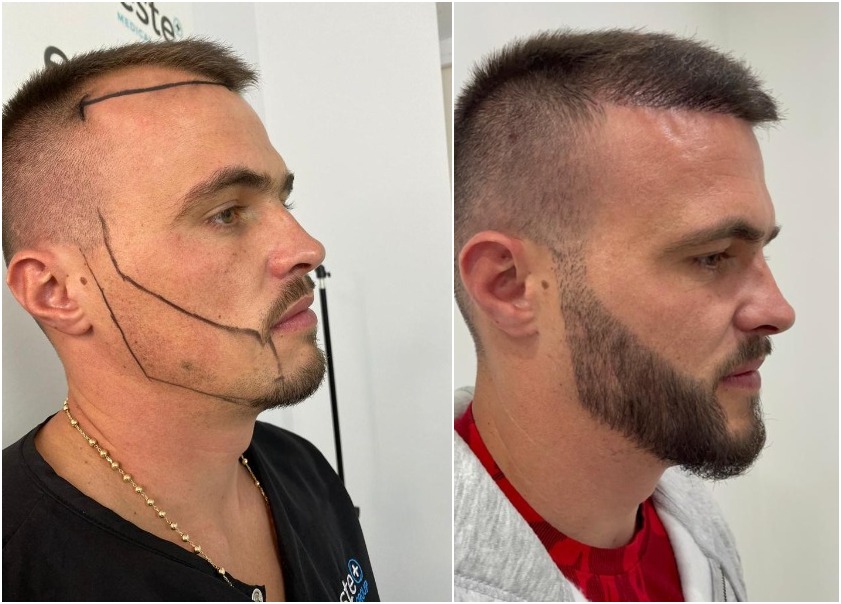
Most beard hair transplant procedures are performed using Follicular Unit Extraction (FUE).
Typically, it may involve:
- Donor Hair Extraction
Individual follicular units are carefully extracted from the donor area using specialised instruments.
- Treatment Area Planning
The beard design is planned according to facial proportions, existing facial hair, and treatment objectives.
- Graft Placement
Hair follicles are placed into the recipient area following the natural angle, direction, and pattern of facial hair growth.
The number of grafts required varies between individuals depending on the treatment area and desired density.
Who May Be Suitable for a Beard Hair Transplant?
A beard transplant may be considered for patients who:
- Have patchy facial hair growth
- Are unable to grow a beard due to genetic factors
- Have facial scarring affecting beard growth
- Wish to improve beard density
- Have sufficient donor hair available
- Are in good general health
Not all individuals will be suitable candidates for beard transplantation.
A consultation can help determine whether treatment is appropriate for your circumstances.
How Much Does a Beard Hair Transplant Cost?
The cost of a beard hair transplant depends on several factors, including:
- Size of the treatment area
- Number of grafts required
- Existing facial hair density
- Complexity of the procedure
- Individual treatment goals
Because every treatment plan is personalised, an accurate quote can only be provided following consultation and assessment.
When comparing beard hair transplant costs, it is important to consider:
- Practitioner experience
- Treatment planning
- Follow-up care
- Procedure scope
How is Recovery Observed Following a Beard Transplant?
Recovery experiences vary between individuals.
Following treatment, some patients may experience:
- Mild redness
- Swelling
- Small scabs around grafts
- Temporary tenderness
First Week
- The transplanted area begins healing and post-procedure instructions should be followed carefully.
First Month
- Some transplanted hairs may shed as part of the normal growth cycle.
Three to Four Months
- Early signs of new beard growth may begin to appear.
Six to Twelve Months
- Facial hair growth continues to develop and mature over time.
- Individual recovery experiences and outcomes vary.
What Are the Risks and Considerations Involved?
As with any medical procedure, clinical beard transplantation carries potential risks and limitations.
These may include:
- Swelling
- Infection
- Bleeding
- Temporary shock loss
- Scarring
- Uneven hair growth
- Requirement for additional treatment
A detailed discussion of risks, benefits, and alternative treatment options forms part of the consultation process.
How Can We Help with a Consultation in Melbourne?
Dr. Eeshara Vithana can consult for facial hair restoration with personalised planning for individuals regarding facial hair transplantation.
Our approach focuses on:
- Individualised treatment recommendations
- Comprehensive consultations
- Evidence-based treatment planning
- Patient education and informed decision-making
- Ongoing support throughout treatment
Each treatment plan is tailored to the individual’s needs and treatment goals.
Frequently Asked Questions
The number of grafts required depends on the size of the treatment area, existing beard density, and desired outcome. This can be assessed during consultation.
Transplanted follicles are generally taken from areas of the scalp that are less susceptible to hair loss. Individual outcomes vary and ongoing facial hair growth depends on several factors.
FUE beard transplantation involves extracting individual follicular units and does not create a linear donor scar. Small extraction sites heal over time and visibility varies between individuals.
Your treating practitioner will provide specific guidance regarding shaving and grooming following the procedure.
In some cases, beard transplantation may be considered for improving hair coverage in areas affected by facial scarring. Suitability depends on the characteristics of the scar and surrounding tissue.
Recovery varies between individuals. Most patients can return to many normal daily activities within a short period, following medical advice and post-procedure instructions.
Frequently Asked Questions
The number of grafts required depends on the size of the treatment area, existing beard density, and desired outcome. This can be assessed during consultation.
Transplanted follicles are generally taken from areas of the scalp that are less susceptible to hair loss. Individual outcomes vary and ongoing facial hair growth depends on several factors.
FUE beard transplantation involves extracting individual follicular units and does not create a linear donor scar. Small extraction sites heal over time and visibility varies between individuals.
Your treating practitioner will provide specific guidance regarding shaving and grooming following the procedure.
In some cases, beard transplantation may be considered for improving hair coverage in areas affected by facial scarring. Suitability depends on the characteristics of the scar and surrounding tissue.
Recovery varies between individuals. Most patients can return to many normal daily activities within a short period, following medical advice and post-procedure instructions.