"Get Assistance for FUT Hair Transplant"
Hair loss can affect both men and women and may occur gradually over time due to genetics, ageing, hormonal factors, medical conditions, or other causes. For some individuals experiencing hair loss, a FUT hair transplant may be considered as one of several available treatment options.
At Hair Transplantation Clinic, our doctor can consult to assess hair loss pattern, donor hair availability, medical history, and treatment goals prior to your procedure. Please contact our clinic to arrange an evaluation.
What Is a FUT Hair Transplant?
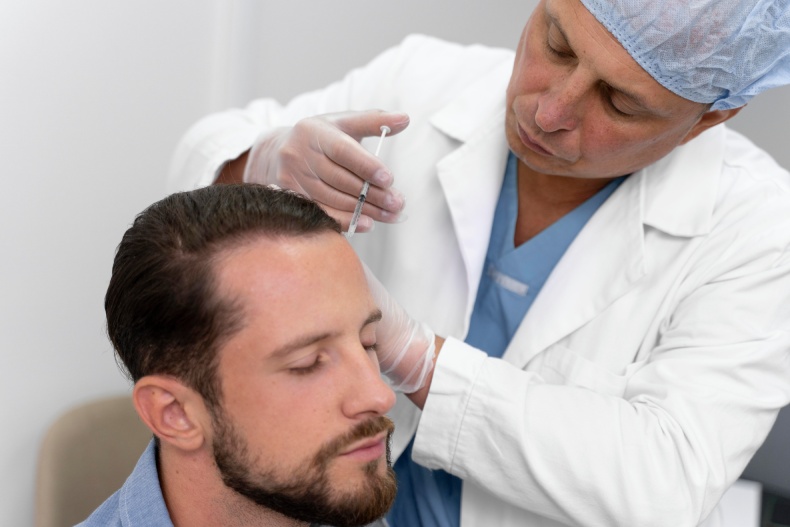
A FUT hair transplant is a surgical hair restoration procedure that redistributes existing hair follicles from areas of healthy hair growth to areas affected by hair loss.
The procedure generally involves:
- Harvesting a strip of donor tissue from the scalp
- Preparing individual follicular units under magnification
- Creating recipient sites in the treatment area
- Placing grafts according to the natural direction and pattern of hair growth
FUT does not create new hair follicles. Instead, it relocates existing follicles from the donor area to areas where additional hair coverage is desired.
Mandatory Surgical Notice
Any surgical or invasive procedure carries risks. Before proceeding, you should seek a second opinion from an appropriately qualified health practitioner.
Who May Be Suitable for FUT Hair Transplantation?
If you experience any of the following factors, you may be eligible for an FUT and FUE hair transplantation treatment in Melbourne:
- Experience male pattern hair loss
- Have a receding hairline
- Have thinning at the crown
- Require a larger number of grafts
- Have adequate donor hair available
- Are in good general health
Suitability can only be determined following a formal medical consultation and clinical assessment.
How Much Does FUT Hair Transplant Cost in Melbourne
The cost of a FUT hair transplant depends on several factors, including:
- The number of grafts required
- The extent of hair loss
- The size of the treatment area
- Individual treatment goals
- Complexity of the procedure
Because each treatment plan is personalised, an accurate cost estimate can only be provided following a clinical consultation. During your appointment, we can assess your hair loss and discuss the financial structure of the treatment options available to you.
Recovery After FUT Hair Transplant Surgery
Recovery experiences vary between individuals. Following treatment, it is common to experience:
- Mild swelling
- Tenderness in the donor area
- Temporary redness
- Formation of small scabs around transplanted grafts
What Does Recovery Look Like
- First Week: The donor and recipient areas begin healing. Patients are provided with comprehensive post-procedure care instructions.
- First Month: Some transplanted hairs may shed as part of the normal hair growth cycle.
- Three to Four Months: Early signs of new hair growth may begin to appear.
- Six to Twelve Months: Hair growth continues to develop and mature over time.
Individual results and recovery timelines vary.
What Are the Risks and Considerations Involved
Mandatory Surgical Notice
Any surgical or invasive procedure carries risks. Before proceeding, you should seek a second opinion from an appropriately qualified health practitioner.As with any surgical procedure, FUT hair transplantation carries potential risks, complications, and limitations. These may include:
- Swelling and bruising
- Bleeding
- Infection
- Permanent scarring
- Temporary shock loss (shedding of existing hair)
- Uneven hair growth or asymmetry
- Requirement for future treatments to maintain results
A detailed, transparent discussion of risks, potential complications, and alternative medical options forms a core part of the consultation process.
How Hair Transplantation Clinic Can Help?
Dr. Eeshara Vithana (MBBS, MD, MSc, FRACGP, FAID, FACAM) provides comprehensive hair loss assessments and personalised treatment recommendations based on each patient’s individual circumstances.
Our approach focuses on:
- Evidence-based treatment planning
- Individualised care
- Comprehensive consultations
- Ongoing patient support
- Clear, realistic communication regarding treatment options
Every treatment recommendation is tailored strictly to the patient’s clinical needs and long-term treatment goals.
Plan Your FUT Assessment in Melbourne
If you are experiencing hair loss and would like to learn more about FUT hair transplant treatment, a clinical consultation can help determine whether FUT, FUE, or another treatment option may be appropriate for your circumstances.
During your consultation, Dr. Eeshara (MBBS, MD, MSc, FRACGP, FAID, FACAM) will assess your hair loss pattern, review your GP referral, discuss available treatment options, and help you make an informed decision regarding your care.
Important Patient Notice: In accordance with Australian regulations for cosmetic surgery, patients must obtain a formal referral from an independent General Practitioner (GP) prior to attending their clinical consultation.
Frequently Asked Questions
The primary difference is the way donor hair is collected. FUT uses a strip harvesting technique, while FUE involves extracting individual follicular units directly from the donor area.
Neither procedure is universally better. The most suitable treatment depends entirely on individual factors including hair loss pattern, donor hair availability, and treatment goals.
Yes. FUT involves removing a strip of donor tissue and therefore results in a permanent linear scar in the donor area. The final visibility and healing of the scar vary between individuals.
Recovery timelines vary significantly between patients. Healing depends on individual biological factors and strict adherence to post-procedure medical instructions.
Some women experiencing hair loss may be suitable candidates for FUT treatment. Suitability depends on the underlying medical cause and pattern of the hair loss.
The number of grafts required depends on the extent of hair loss, available donor hair density, and desired treatment outcomes, which can only be evaluated during a clinical assessment.