

Hair brushing is a simple habit that’s part of many people’s daily routines. However, the way hair is brushed can...
Read More
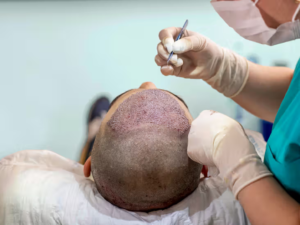
FUE Hair Transplant Explained: A Complete Guide to the Procedure, Process and Outcomes
If you are experiencing hair loss or hair thinning, you are not alone. Many individuals seek medical advice to understand the treatment options available. One such option is FUE (Follicular Unit Extraction) hair transplant, a recognised surgical technique where individual hair follicles are taken from a donor area and transplanted into areas affected by thinning or hair loss using a controlled, clinically planned method.
At Hair Transplantation, consultations are available for people seeking FUE hair transplant options in Melbourne.
This blog post shares general educational information to support informed conversations with a qualified medical practitioner about suitability and expectations.
What Is FUE Hair Transplant and How Does It Work?
FUE stands for Follicular Unit Extraction. It is a surgical hair restoration technique where individual hair follicles are taken from a donor area and transplanted into areas affected by thinning or baldness.
Clinically, FUE involves:
- Extraction of individual follicular units one by one
- Use of micro-punch instruments (usually 0.8–1.2 mm)
- No removal of a skin strip
- Procedure performed under local anaesthesia
- Healing with small dot scars instead of a linear scar
- Implantation following natural hair growth direction and angle
Because follicles are handled individually, doctors can control placement, spacing, and density. This precision supports a natural pattern of hair distribution that integrates with existing hair.
Who Is a Suitable Candidate for FUE Hair Transplant?
FUE hair transplant may be considered for men and women with:
- Male or female pattern hair loss
- Thinning at the hairline or crown
- Localised hair loss due to traction or previous procedures
- Selected cases of beard or eyebrow thinning
However, FUE may not be appropriate for advanced baldness if donor hair is limited. A comprehensive medical consultation is essential to assess:
- Donor hair availability
- Scalp and skin health
- Medical history
- Current and future hair loss pattern
- Realistic expectations
Suitability and outcomes can only be determined after individual clinical assessment by a qualified medical practitioner.
Overview of the FUE Hair Transplant Procedure
The FUE process follows a clear clinical structure focused on safety and precision.
- The donor area is prepared and trimmed
- Local anaesthetic is administered
- Individual follicles are extracted using micro instruments
- Grafts are preserved and assessed
- The recipient area is mapped according to natural growth patterns
- Tiny channels are created
- Follicles are implanted into thinning or balding areas
Most procedures are completed in a single day, depending on the number of grafts required. Many people usually go home the same day with medical aftercare with instructions and a planned follow-up.
Benefits of FUE Hair Transplant
From a medical and surgical perspective, FUE offers several advantages:
- No linear scarring
- Minimally invasive tissue handling
- Faster donor area healing compared to strip methods
- Natural follicle placement
- Controlled density planning
- Suitable for multiple treatment zones
- Compatible with short hairstyles
- Generally, well tolerated post-operatively by most individuals
FUE does not stop natural hair loss progression. It restores hair in treated areas but does not prevent future thinning in untreated zones, which is why long-term medical management and monitoring are important.
Understanding FUE Hair Transplant Cost
When people search for the FUE hair transplant prices, they often expect a fixed number. In reality, pricing depends on several medical and technical factors.
Hair transplant FUE cost usually varies based on:
- Number of grafts required
- Area being treated
- Hair density and texture
- Complexity of the procedure
- Individual hair loss pattern
- Treatment planning and staging
The FUE hair transplant cost is determined only after a proper clinical assessment, where donor availability, scalp health, and treatment requirements are evaluated to create an appropriate and safe treatment plan.
Recovery & Expected Results
Most people experience mild swelling or small scabs at the treated sites for a few days. Hair growth typically begins gradually around 3–6 months, with visible improvement continuing over 12–18 months. Individual outcomes vary depending on biological factors, healing response, and hair characteristics.
Transplanted follicles are generally long-term, provided the procedure is clinically appropriate and properly performed.
Schedule a Consultation
If you’re considering an FUE hair transplant in Melbourne, the next step is to schedule a consultation. At Hair Transplantation, free, no-obligation consultations are available to discuss your options and create a clinically appropriate, individualised treatment plan based on assessment and suitability.
Related Posts
No posts found!
FUE Hair Transplant Explained: A Complete Guide to the Procedure, Process and Outcomes
If you are experiencing hair loss or hair thinning, you are not alone. Many individuals seek medical advice to understand...
Read More
6 Reasons to Consider a Hair Transplantation Surgery
Hair loss may present as scalp hair thinning, recession of the frontal hairline, or increased scalp visibility. These changes are...
Read More
5 Signs You Need a Hair Transplant in Melbourne
Hair loss tends to happen slowly and can be affected by things like hormones, genetics, and age. What may start...
Read More